Tiling
Tiling in Worcester
Good tiling is both functional and aesthetic. We install ceramic, porcelain and natural stone tiles in bathrooms, kitchens, hallways and feature walls.
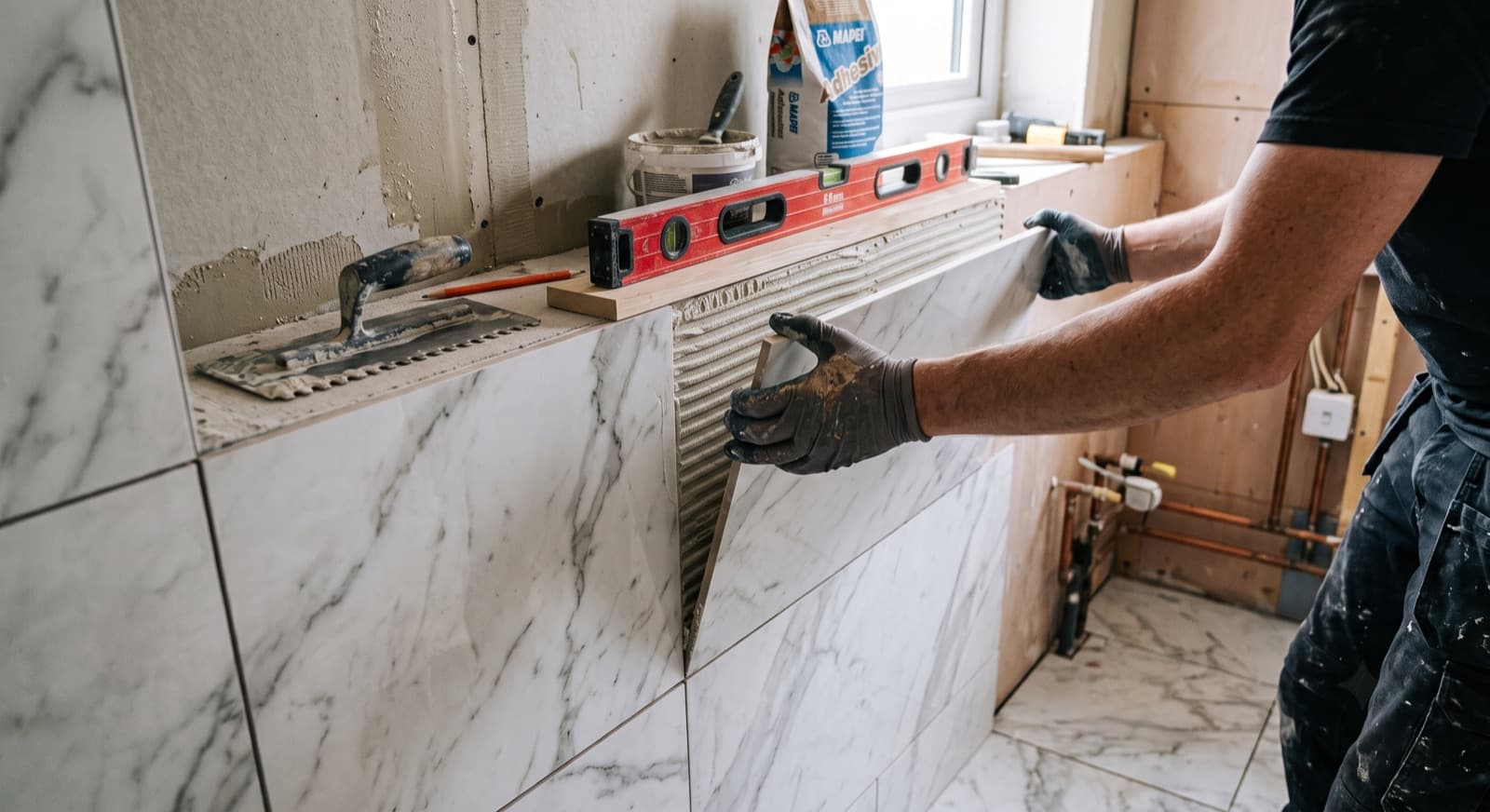
Tiling in Worcester
Tiling is craft work. Poorly laid tiles crack, gaps trap water and dirt, and grout fails quickly. Well-laid tiles last decades and look sharp. We assess the substrate (plasterboard, concrete, render), ensure it is proper and stable, waterproof wet areas, and lay tiles with care: consistent joints, level surfaces, tight cuts and clean grout lines. Whether you want simple white metro tiles in a bathroom or a feature stone wall in a hallway, we do it right.
Tile choices are vast: ceramic (affordable, varied colours and patterns), porcelain (harder, lower water absorption, good for wet areas and flooring), natural stone (slate, limestone, granite,beautiful but needs sealing and care), and increasingly, large-format porcelain sheets that minimize grout lines and create a contemporary look. We advise on durability, slip resistance, maintenance and cost based on location and use.
Preparation is critical. Substrates must be flat (usually within 3 to 5mm across the tiled area), stable and free of dust. In bathrooms and wet areas, walls are sealed with waterproof membrane or tanking before tiling to prevent water ingress behind tiles. We do all this before laying a single tile, ensuring the finished work performs and lasts.
What We Do
Tiling scope and installation methods
Surface preparation and waterproofing
We inspect the substrate (plasterboard, concrete, timber board), confirm it is flat and stable, and repair or level if needed. In bathrooms and wet areas, we apply waterproof membrane (tanking) to walls and floors, particularly around showers, baths and tiled splash backs. This stops water penetrating behind tiles and rotting the substrate.
Tile selection and layout planning
We discuss tile choice with you: colour, size, material (ceramic, porcelain, stone), texture and pattern. For larger areas, we plan layout to minimize small slivers at edges and walls,this looks professional and is easier to cut and install. We may do a dry layout (tiles in place, not fixed) to confirm spacing and appearance before any adhesive is applied.
Tile cutting and fixing
Tiles are fixed using appropriate adhesive (cement-based, ready-mixed or epoxy depending on tile and substrate). We spread adhesive with a notched trowel to ensure full contact, bed tiles firmly, and maintain consistent joint width using spacers. Cuts at edges and around fixtures are made carefully using a wet saw to avoid chips or cracks. We work methodically to ensure level, flat surfaces and tight joints.
Grouting and joint sealing
Once adhesive has set, joints are grouted with cement-based or epoxy grout matched to tile colour. We clean excess grout from tiles, smooth joint lines and cure grout appropriately. Natural stone tiles and porous materials may be sealed before or after grouting to protect from staining. Grout sealer is applied to protect joints from water and dirt.
Natural stone and specialist tiles
Natural stone (slate, limestone, granite, travertine) demands care: they are often softer than ceramic, variable in colour and texture, and can be marked by water or acidic products. We source appropriate stone for the location (slate for wet areas, limestone for walls), seal appropriately, and install sympathetically. Large-format porcelain planks and mosaic tiles are also installed to the same high standard.
Good to Know
Tiling considerations in Worcester homes
The practical and planning side, handled as part of the job.
Bathrooms and wet-room tiling
Bathrooms demand proper waterproofing and drainage behind and around tiles. We tank walls and floors thoroughly, particularly in showers and around baths. Grout is sealed to resist water penetration. Ventilation (extractor fans) works alongside waterproofing to manage condensation and prevent mold. We discuss ventilation needs alongside tiling plans.
Period properties and period-appropriate tiling
Some Worcester homes are restored to period aesthetic. Victorian bathrooms may have had ceramic tiles; Georgian properties may have stone or encaustic tiles. We can source and install period-appropriate tiles that respect the building's character while using modern adhesives and waterproofing for longevity. Discussion of aesthetic and durability trade-offs is part of our service.
Slip resistance and floor tiling
Floor tiles in kitchens, bathrooms and hallways should have appropriate slip resistance (R10 or above is typical). We advise on material and glaze finish to balance aesthetic with practical safety, especially for wet areas and properties with elderly or mobility-restricted users.
Related
More from CH Developments in Worcester
Questions & Answers
Tiling in Worcester: common questions
How much does tiling cost in Worcester?+
Cost depends on tile type, area and complexity of layout. Ceramic tiles are more affordable than porcelain or natural stone. What drives the cost is the area to be tiled, the tile type you choose, any substrate preparation or waterproofing needed, and the complexity of the layout. We provide a detailed fixed price after a site visit and discussion of tile selection. Contact us with details and we will arrange a survey and quotation.
Can you tile over existing tiles?+
Sometimes. If the existing tiles are firmly adhered and we can create a flat, stable surface on top, new tiles can be fixed directly. However, tiling over tiles can add height (relevant in doorways) and may not be necessary. We assess condition upfront and advise whether stripping old tiles or tiling over them is appropriate.
How long does tiling take?+
Installation timescale depends on area, tile size and complexity. A bathroom splash back (2-3 square metres) typically takes 2 to 3 days including surface prep and grouting cure. A full bathroom (floor and walls) might take 5 to 7 days. We provide a detailed programme at quotation stage. Cure time for adhesive and grout is factored in before the room is fully usable.
Do natural stone tiles need special care?+
Natural stone tiles are more porous and variable than ceramic. They should be sealed before grouting and may need periodic resealing depending on location and use. Some stones (limestone, travertine) can be stained by water or acidic substances, so finishes and cleaning products must be chosen carefully. We advise on appropriate stone for your location, discuss care and maintenance, and seal stone properly during installation.
Written and reviewed by
Atif Ali
Lead Builder, CH Developments
Atif Ali has worked in construction for over seven years and leads CH Developments projects from the first site visit to final sign-off. His clients stay with him: the average customer has worked with CH Developments for more than three and a half years, and most new work comes through referrals from existing customers.
Connect with Atif on LinkedInTiling in Worcester? Let's talk.
Tell us about your project and we'll arrange a free, no-obligation site visit in Worcester and a fixed-price quotation.
Get In Touch
Request your free quote
Tell us about your project and we'll be in touch to arrange a free, no-obligation site visit across Redditch, Bromsgrove and Worcestershire, with Birmingham projects considered where the brief fits.
Contact details
- Registered office36A Birchensale Road
Redditch, Worcestershire
B97 6JS - Phone07857 039700
- Opening hoursOpen 24 hours, 7 days a week
- ReviewsRead our reviews on Google